
Glass beads are spherical, hardened soda-lime glass microbeads (no free silica), propelled by compressed air or wheel blast machines for non-destructive surface cleaning, peening, polishing, and stress relief. Unlike angular abrasives (alumina, silicon carbide), glass beads peen rather than gouge the surface, preserving dimensions.
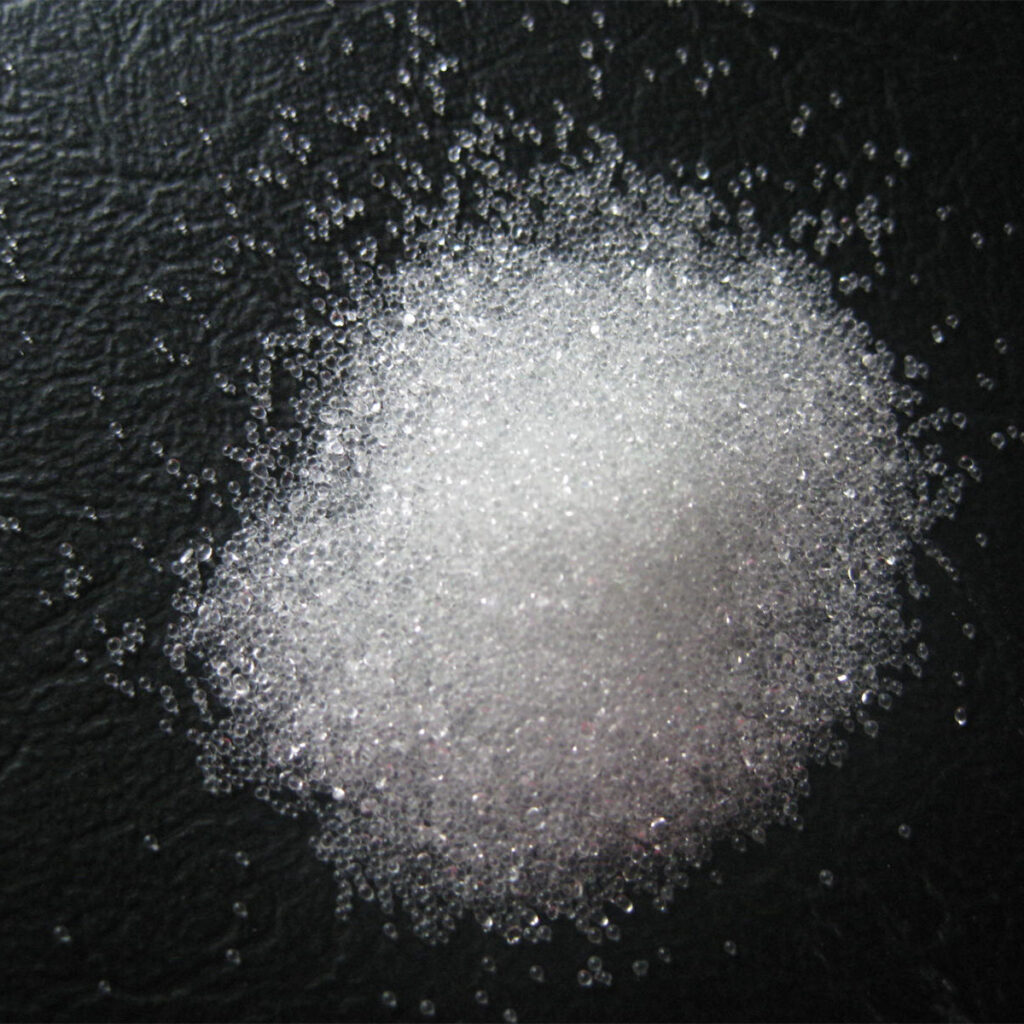
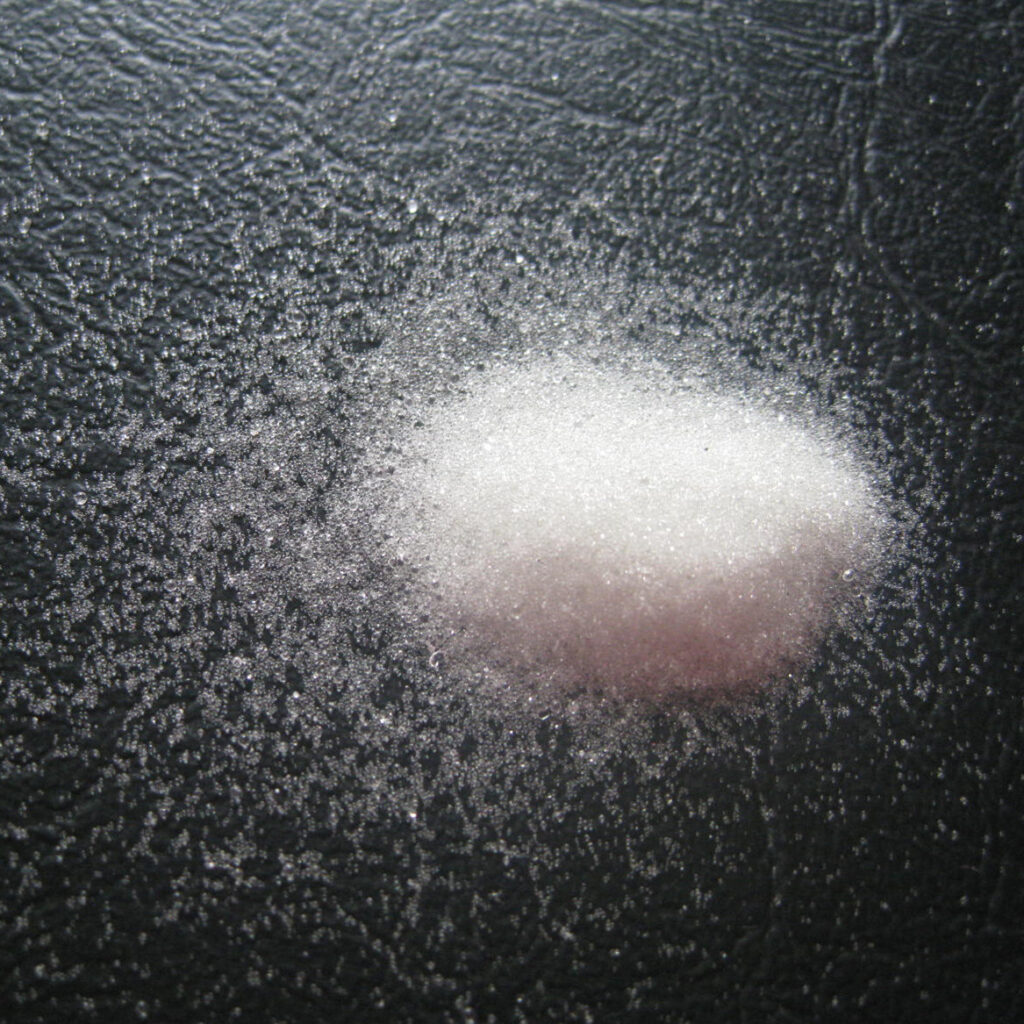
Glass beads properties:
| Property | Typical Value | Remarks for Coating/Metal Processing |
|---|---|---|
| Material | Soda-lime glass (SiO₂-dominated) | Inert, no chemical reaction with substrates |
| Mohs Hardness | 6–7 | Softer than steel/Al₂O₃, non-gouging |
| True Density | ~2.5 g/cm³ | Bulk density ~1.5 g/cm³ |
| Roundness | ≥90% (premium grade ≥95%) | Poor roundness=uneven finish & fast wear |
| pH | 6.8–7.5 (neutral) | No effect on coating curing |
| Moisture | ≤0.2% | Prevent clumping in blasting cabinet |
| Max Use Temp | <120°C | Avoid high temp to prevent bead fusion |
Suitable size:
| Size/Grade | Typical Diameter | Application Scenarios | Recommended Pressure |
|---|---|---|---|
| Fine (320#/220#) | 20–45 μm | Precision parts, medical devices, fine polishing, semiconductor lead frames | 20–40 psi |
| Medium (170#/150#/100#) | 70–150 μm | Stainless steel matte finish, mold cleaning, pre-plate/pre-anodize surface prep | 40–80 psi |
| Coarse (80#/60#/40#) | 180–500 μm | Heavy-duty paint/rust removal, castings, large metal structures, shot peening for stress relief | 60–100 psi |
Typical Industry Applications
- Aerospace: Turbine blades, landing gear components shot peening to eliminate residual tensile stress
- Automotive: Aluminum wheels matte finishing, engine block cleaning, pre-powder coating surface prep
- Medical: Surgical instruments, implant components polishing, no metal contamination
- General Manufacturing: Mold cleaning, stainless steel weld seam finishing, electronic component housing surface treatment