
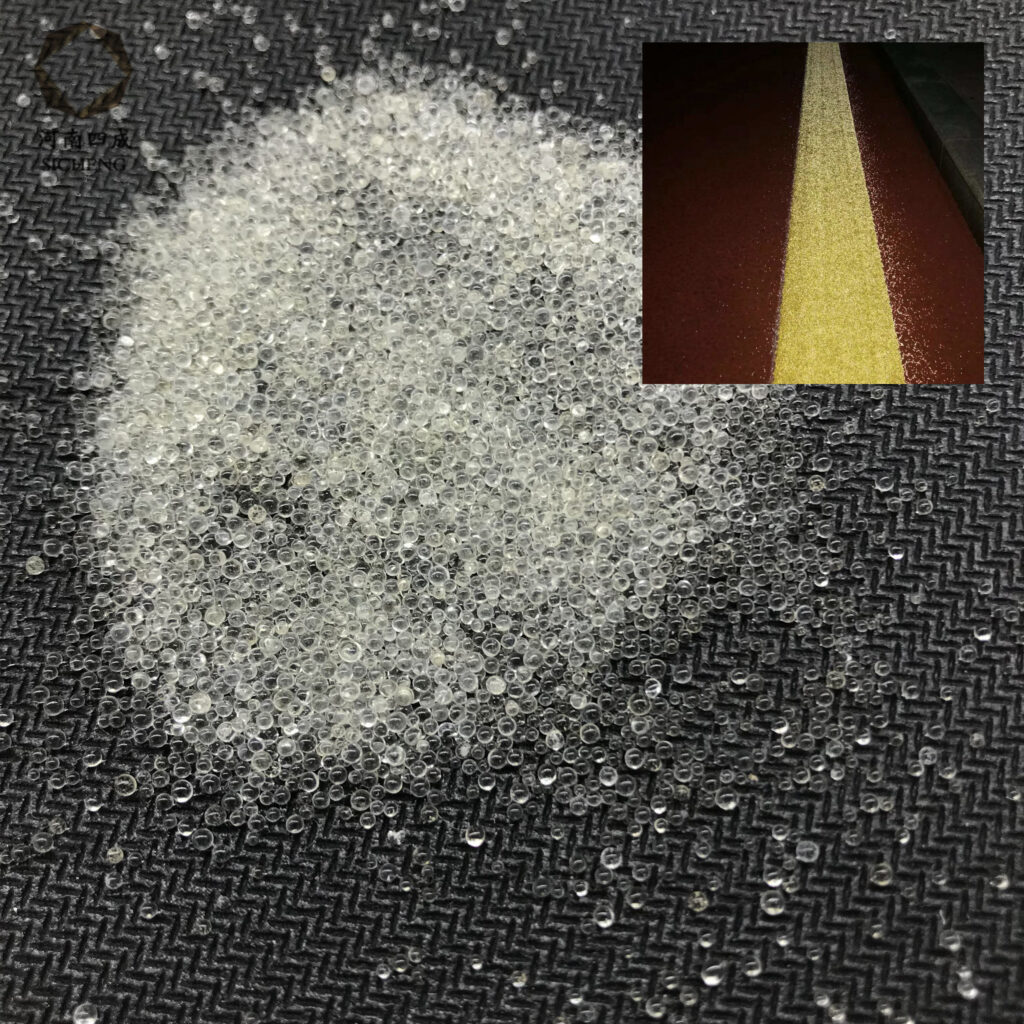
Road marking glass beads are tiny, spherical, high-purity glass particles that enable retroreflection of vehicle headlight beams back to the driver, drastically improving the visibility of road lines at night, in rain, or in fog—they are a critical safety material for traffic engineering.
Working Principle
When light enters the glass bead (refractive index typically 1.50, high-performance grades ≥1.65–1.90), it refracts at the air-glass interface, reflects off the bead-coating interface, and refracts out again to return along the incident path. This directed light return makes the marking bright even in wet conditions (beads stand above the water film).

Types, Specifications & Standards
- Application method classification
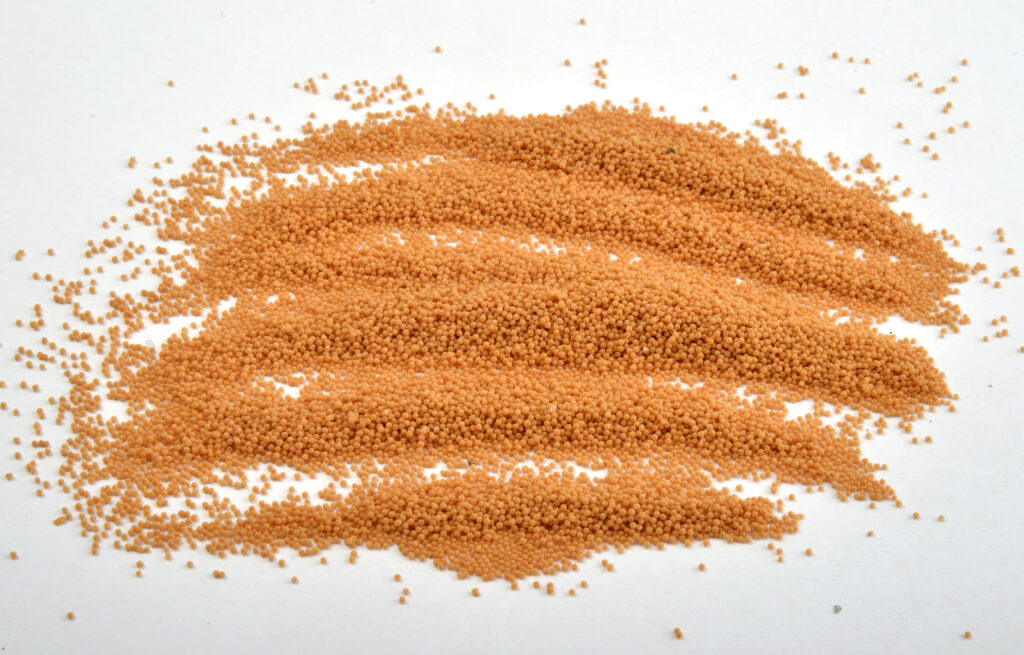
- Drop-on beads: Sprayed onto the wet paint surface immediately after marking application. Provide instant retroreflection; typical size 0.3–0.85 mm. Used for all paint types, especially cold paints.
- Premix beads: Mixed into the thermoplastic coating during production. Exposed gradually as the coating wears, ensuring long-term reflectivity; smaller size (often <0.3 mm). Thermoplastic markings often use both drop-on (instant brightness) and premix (durability).
| Metric | General Beads | High-performance Beads | Impact |
|---|---|---|---|
| Refractive index | ~1.50 | ≥1.65, ≥1.90 (super high RI) | Higher RI=stronger retroreflection, better wet-night visibility |
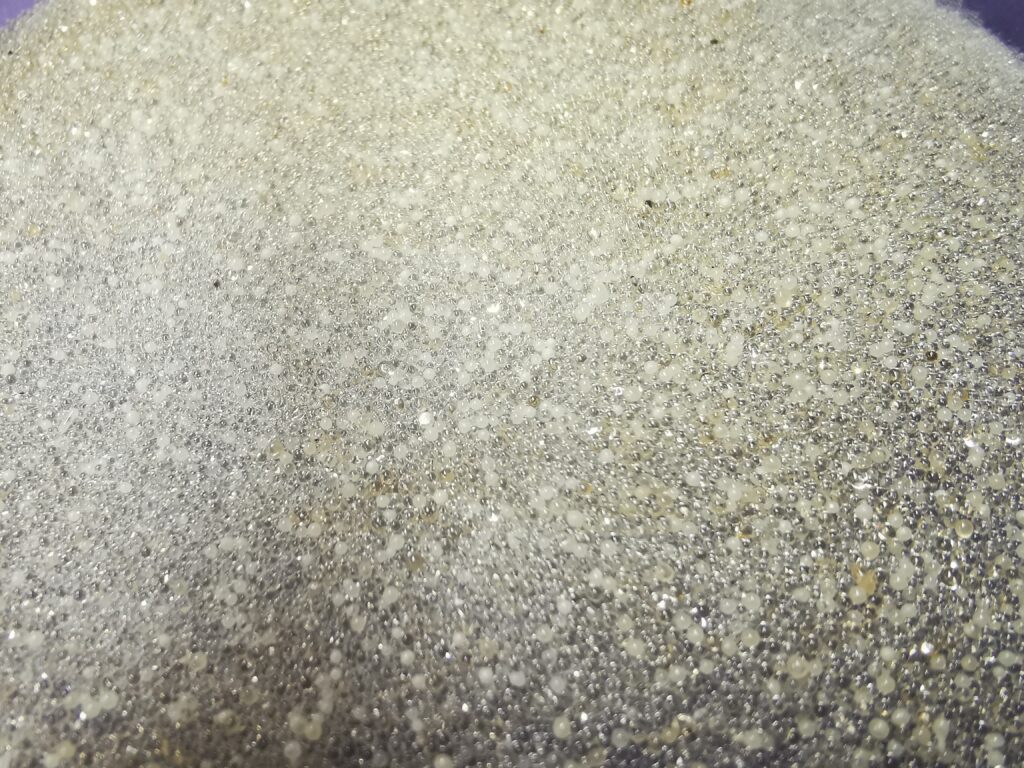
| Particle size | 150–850 μm (standard); fine <150 μm; coarse >850 μm | Narrow distribution, minimal oversized particles | Oversized beads cause skid issues; undersized reduce reflection |
| Roundness & clarity | Good sphericity | >90% perfectly spherical, no bubbles/cracks | Irregular beads scatter light instead of retroreflecting |
| Chemical resistance | Weather-resistant | Alkali/UV resistant, coated options for adhesion | Prevents degradation under road conditions |
Materials & Production
Made from recycled or virgin soda-lime glass, melted and sprayed into a cooling chamber to form perfect spheres, followed by precise air classification for particle size control and impurity removal. High-refractive-index beads use formulations with titanium or zirconium oxides to boost the refractive index.
Application Processes & Selection Tips
- Thermoplastic markings (high-traffic highways):Premix beads+post-application drop-on beads; temperature control during spraying is critical to bead embedding depth (typically 50–60% of bead diameter).
- Cold paint/water-based/double-component (urban roads, secondary roads):Mainly drop-on beads, applied immediately after painting with specialized bead spreaders.
- Selection guidance
- Rural roads/low traffic: RI 1.50 beads, cost-effective.
- Highways/expressways/tunnels: High RI (≥1.65) beads, combined drop-on+premix.
- Rain-prone areas: Ultra-high RI (≥1.90) beads, larger diameter to avoid submersion in water.
Benefits & Maintenance
- Safety: Significantly reduces nighttime accidents; wet-night visibility is 3–5 times better than non-beaded markings.
- Durability: Extends the effective life of road markings, reducing maintenance frequency.
- Cost-effectiveness: Low incremental cost compared to the accident reduction benefits.
- Common issues & solutions: Bead loss (use coated beads for better adhesion); uneven spread (calibrate bead spreaders); oversized particles causing scratches (strict size classification).